May — Aug 2026 · Seoul, South Korea
Robotics Software Engineering Intern
Bear Robotics
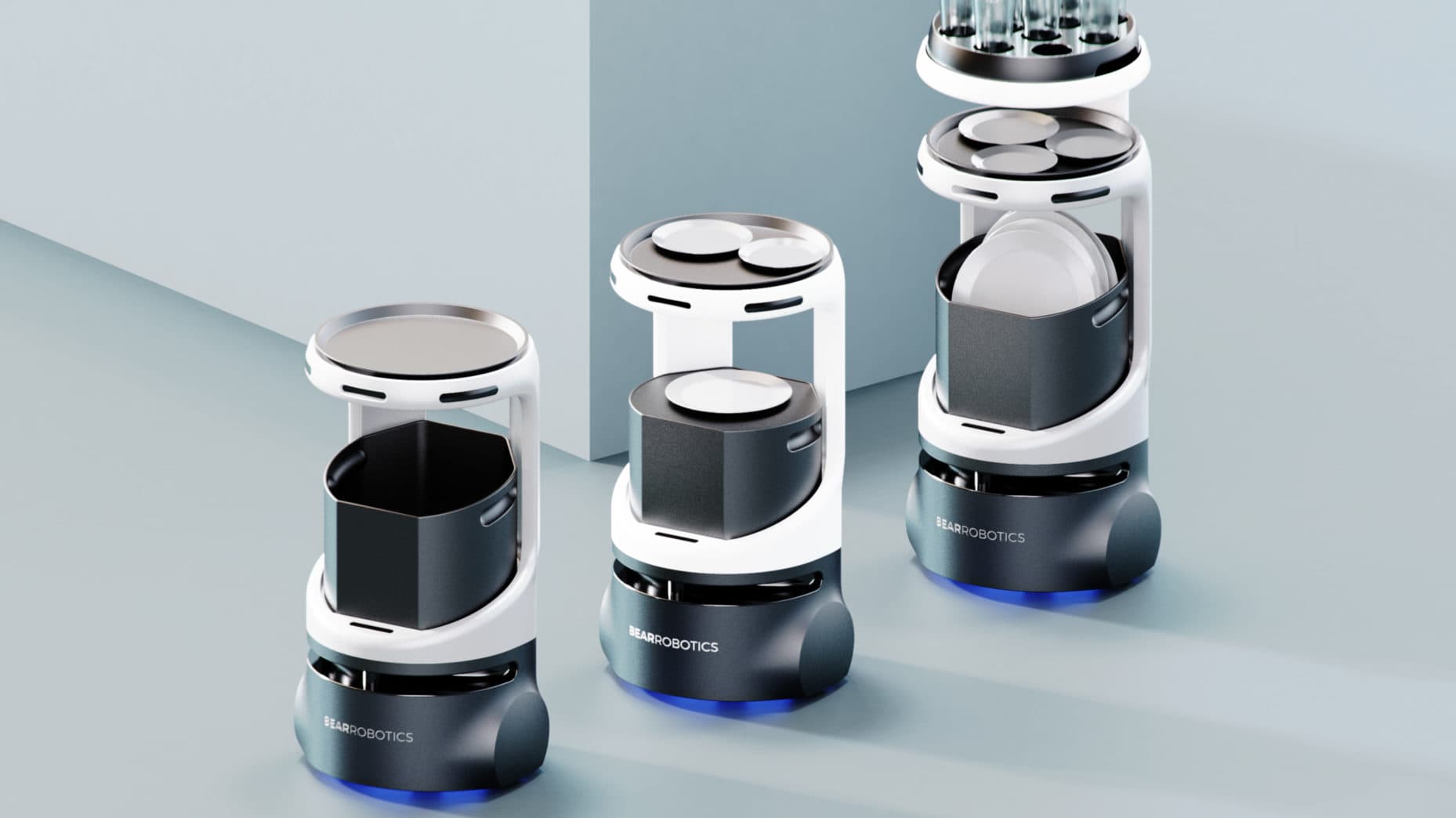
During Summer 2026, I worked at Bear Robotics, a company developing autonomous service robots for busy restaurant environments.
I took ownership of a project exploring the use of Model Predictive Path Integral (MPPI) control as an alternative to the existing Model Predictive Control (MPC) approach for local navigation. The goal was to improve navigation behavior, particularly for robots with non-circular shapes operating in tight and dynamic environments.
The Problem
The existing MPC-based approach worked well in many situations, but had limitations when accounting for the full shape of non-circular robots. This could lead to less reliable navigation and collision-prone behavior in challenging environments.
MPPI offered a promising alternative by considering the robot's shape and surrounding environment while evaluating many possible future paths.
My work involved developing an MPPI-based local planner and evaluating its performance against the existing MPC approach through both simulation and real-robot testing.
Results — MPC vs. MPPI
As expected, the MPPI-based approach improved navigation behavior for rectangular robots, particularly in situations where accurately accounting for the robot's shape was important.
Testing showed fewer collision-prone behaviors and more reliable navigation in challenging environments.
Test Sample 1
Test Sample 2
Other Contributions
Alongside the main project, I supported various testing and evaluation efforts using both real robots and simulation. This included investigating navigation behavior, validating changes, and helping test the system across different scenarios.
Overall, this experience gave me valuable hands-on experience developing and testing autonomous mobile robot systems in a real-world environment. I also had the opportunity to learn from and build meaningful relationships with an excellent team.
Stack
- C++
- ROS
- Model Predictive Path Integral (MPPI)
- Motion planning